

By Dr. Shiv Kumar Goel, MD · Medically reviewed October 2026
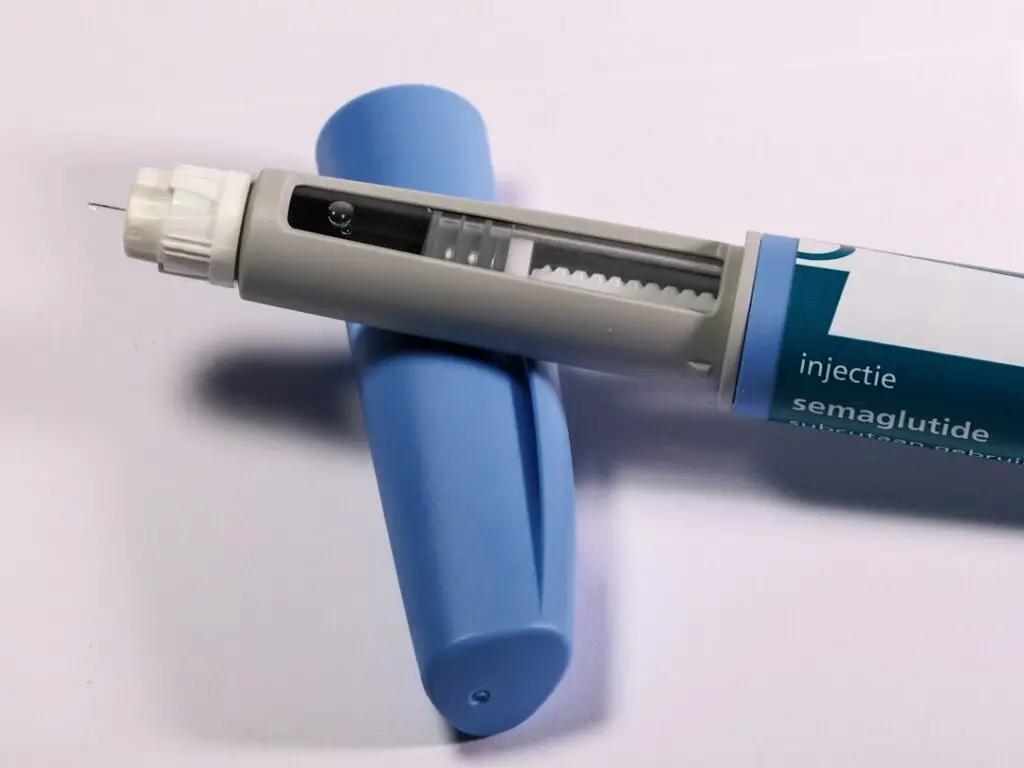
She had the pen in her hand, still in the box, unopened, when she told me she didn’t want to fill it again. Call her Renata, a composite built from a dozen patients who’ve had this exact conversation in that exact chair, not one real person. Fourteen months on tirzepatide. Forty-one pounds down. She’d hit the number she’d been chasing since her forties, and now she wanted off before her daughter’s wedding in October. She didn’t like handing a needle to the pharmacist every month, and her insurance had just added four hundred dollars to the cost. She wanted to know one thing. Would it come back.
What the trials show after stopping
Not gradually, and not a rumor. There’s an actual answer, and it comes from the same trial that proved the drug works in the first place. The STEP 1 extension followed people for a full year after they stopped semaglutide (Wilding et al., Diabetes Obes Metab, 2022). At week 68, on the drug, the treatment group had lost 17.3% of their body weight. By week 120, about a year off it, they had regained 11.6 percentage points of that, on average. The placebo group, who’d never had much to lose in the first place, drifted back less than two points. Net effect at week 120, a little over two years from the start: a 5.6% loss still holding for the people who’d been on the drug, against essentially nothing for the people who hadn’t.
That’s not nothing. It’s also not what the number on week 68 promised.
Blood pressure and cholesterol moved the same direction. The trial’s own language is plain about it: “cardiometabolic improvements seen from week 0 to week 68 with semaglutide reverted towards baseline at week 120 for most variables.” Not all. Most. The people who held onto the most ground tended to be the ones who’d changed something else along the way (protein intake, resistance training, sleep), not the ones who’d treated the injection as the whole plan.
I told Renata what the drug actually does, because most patients are never told this plainly. GLP-1 medications suppress appetite and slow gastric emptying for as long as the drug is active in the system. They don’t retrain hunger signaling on their own. They don’t rebuild the muscle that dieting cost her unless something else does that work at the same time. Stop the drug and the appetite suppression stops with it, usually within a few weeks. What’s left standing is whatever habits got built underneath it, or didn’t.
This isn’t an argument against stopping. Patients need to, for cost, for side effects, for a wedding in October. It’s an argument against stopping the way most people do it: all at once, with no plan for the week after.
A note on tirzepatide specifically, since Renata was on it and not semaglutide. Tirzepatide acts on two gut hormone receptors instead of one, GLP-1 and GIP together, and in the one head-to-head trial it produced more weight loss than semaglutide: 20.2% versus 13.7% at 72 weeks (Aronne et al., N Engl J Med, 2025). Its withdrawal trial was built differently from STEP 1. Everyone took tirzepatide for 36 weeks and lost about 21% of their weight. Then half were switched to placebo without knowing it. Over the next year that group regained 14% of their body weight, while the people who stayed on the drug lost another 5.5% (Aronne et al., JAMA, 2024). Different drug, different design, same direction. Stop it and most people start climbing back.
Why the weight comes back
What actually drives the regain, in plain terms: hunger isn’t a habit sitting on top of biology, it’s regulated by hormones (ghrelin, leptin, peptide YY, among others), and a GLP-1 drug is quieting part of that signaling chemically. Take the drug away and the underlying appetite system, which was never retrained, just muted, comes back to its old volume. That’s not a failure of willpower reasserting itself. It’s chemistry leaving the room. The only things that reliably hold ground after it leaves are the ones that changed something structural underneath: more muscle mass, which raises resting energy use, and eating and movement patterns that got built as actual habits rather than borrowed from the injection.
How I taper patients off
What I do instead, when someone is ready to come off a GLP-1, is taper the dose over six to eight weeks rather than stopping cold. Appetite returns gradually that way, and the patient can feel it happening in real time instead of being ambushed by it. Before the taper starts I want a body composition scan, not just a scale weight. The scale hides how much of the loss was muscle, and muscle is what keeps a metabolism from sliding backward once the drug leaves.
The resistance training goes in before the appetite comes back, not after, while the drug is still doing part of the work of keeping intake down. Then glucose, lipids and blood pressure get rechecked at three months and again at six. Those numbers move before the scale does. They’re the earliest honest signal of which way things are heading.
Renata didn’t stop that day. She decided to taper starting after the wedding instead of stopping before it, and we started the strength work now, while the drug is still carrying part of the appetite load for her. That’s the real choice in front of most people holding an unfilled pen. Not whether to stop. How, and what gets built underneath the drug before it’s gone.
Who shouldn’t stop alone
One more thing worth saying plainly, because it doesn’t get said enough at the counter: this isn’t the right move for everyone on their own. Anyone stopping a GLP-1 who is also managing type 2 diabetes needs that taper coordinated with whoever manages their glucose control, not done solo. Appetite isn’t the only thing the drug was touching.
The honest answer to Renata’s question was this. Some of it comes back. How much is not fixed in advance. It depends on what gets built in the year she already bought herself.
Questions patients ask me
Will I regain the weight if I stop semaglutide?
Most people regain a good share of it. In the STEP 1 extension, people got back about two-thirds of what they’d lost within a year of stopping. What you build underneath the drug while you’re still on it changes how much.
Is stopping tirzepatide any different?
The trial data point the same way. People switched to placebo after 36 weeks on tirzepatide regained 14% of their body weight over the following year, while people who stayed on it kept losing.
Should I taper off a GLP-1 or stop all at once?
I taper most patients over six to eight weeks so appetite comes back gradually, and I start strength training before the taper, not after. If you have type 2 diabetes, don’t stop without the person who manages your glucose.
Related reading: My testosterone is normal, so why do I still feel low? and Why do my perimenopause labs come back normal when I feel awful?
If you’re thinking about coming off a GLP-1 and want a plan for it, you can book a visit here.

About the author. Dr. Shiv Kumar Goel, MD, is an internal medicine physician trained at Mount Sinai and the founder and medical director of Prime Vitality Care in San Antonio. He has practiced medicine for 25 years, served as an assistant professor of internal medicine at Texas Tech University Health Sciences Center, and is certified in functional medicine by the American Academy of Procedural Medicine. His writing appears in KevinMD, Doximity Op-Med, San Antonio Medicine, and the San Antonio Express-News. Read his full bio →
This article is for education and isn’t a substitute for care from your own physician.