


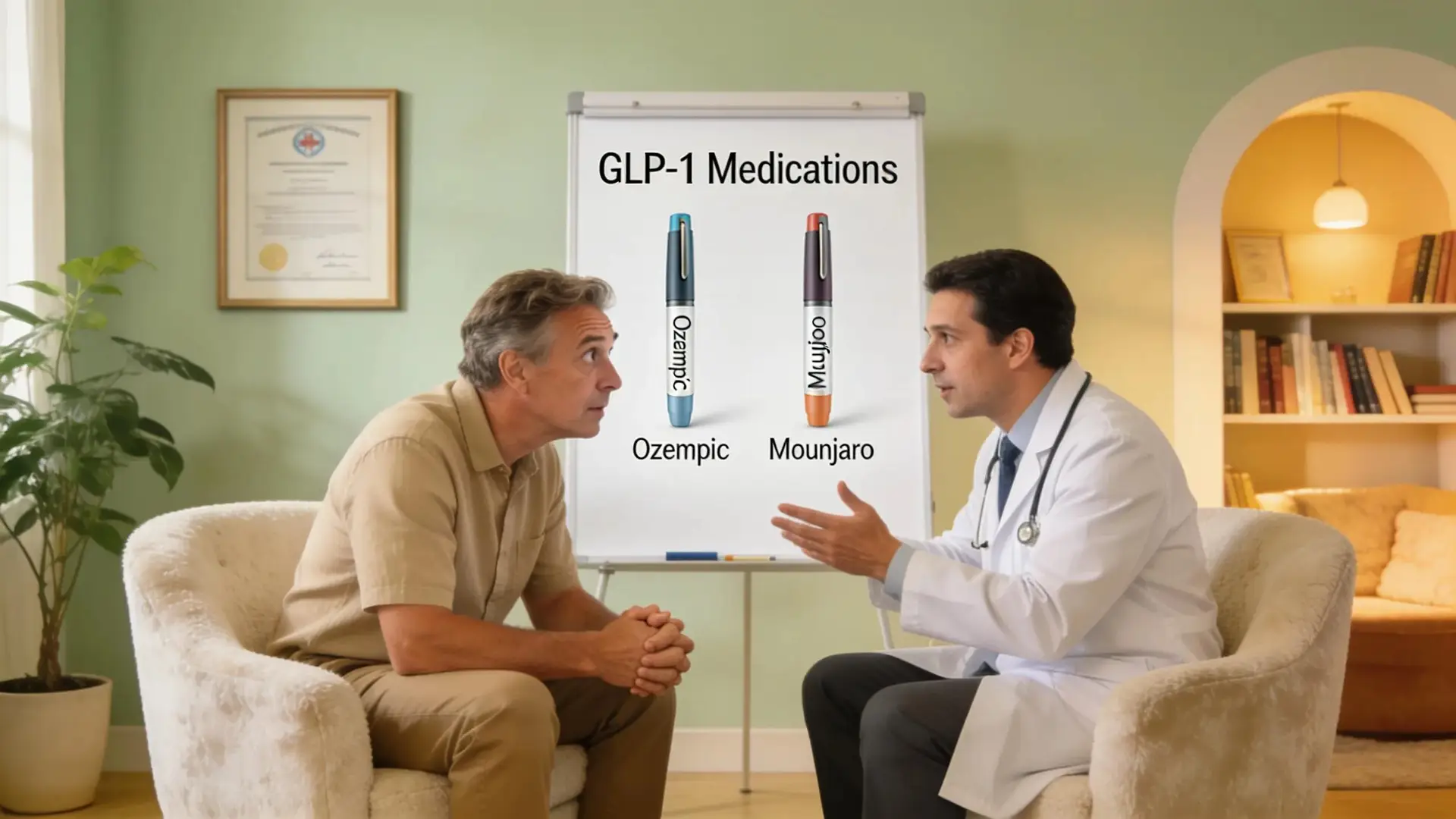
Comparing Ozempic and Mounjaro for Weight Loss
By Dr. Shiv K. Goel, MD
Medically reviewed by Dr. Shiv K. Goel, MDLast updated: July 29, 2026
Ozempic and Mounjaro have emerged as prominent options in the landscape of GLP-1 weight-loss medications, captivating the interest of patients and healthcare providers alike. In this article, we will explore a detailed comparison of these two medications, shedding light on their clinical benefits, mechanisms of action, side effect profiles, and cost implications. Individuals seeking effective weight management solutions often find themselves navigating a sea of options, and it’s crucial to understand how each treatment operates and what unique advantages they offer. This guide will also delve into recent clinical trial results demonstrating their respective weight loss benefits and provide insights for potential users. Key areas of focus will include the clinical efficacy, safety profiles, costs, and practical aspects of each medication.
Comparison of Ozempic (Semaglutide) and Mounjaro (Tirzepatide)
Ozempic and Mounjaro represent two different approaches within the category of GLP-1 receptor agonists, each with unique mechanisms and efficacy rates. Ozempic, also known by its generic name semaglutide, is specifically engineered to enhance insulin secretion while suppressing appetite. Meanwhile, Mounjaro, or tirzepatide, combines the mechanisms of GLP-1 and GIP (Gastric Inhibitory Polypeptide) receptors, promoting greater metabolic effects. Both medications have shown significant potential in clinical trials for achieving weight loss and improving glycemic control.
Clinical Benefits and Effectiveness:
The clinical efficacy of both Ozempic and Mounjaro has been thoroughly analyzed through numerous research studies. Ozempic has been shown to contribute to an average weight loss of approximately 15-18% of initial body weight for patients over a 68-week period. On the other hand, Mounjaro has demonstrated even more remarkable results in clinical trials, with patients achieving an average weight loss of around 20-23% within the same timeframe. This indicates that Mounjaro may be more effective for patients with higher baseline body weight and metabolic resistance.
These findings highlight the potential of both medications, though Mounjaro’s dual-action approach may provide a critical advantage for certain patient profiles. It is important to note that rapid weight loss on GLP-1 medications can include lean muscle loss, so adequate protein intake and resistance training are essential components of a comprehensive weight-loss program.
Tirzepatide vs. Semaglutide for Weight Loss: A Comparative Meta-Analysis
The aim of the study was to compare the effectiveness of tirzepatide versus semaglutide in producing weight loss.MethodsA systematic search was conducted in databases PubMed, Scopus, and Web of Science on January 22, 2025, using search terms (9tirzepatide, semaglutide, and weight loss) and their alternatives, which yielded 751 studies in total. After deduplication, title/abstract and full text screening was conducted, and studies were assessed based on the eligibility criteria. After extracting the data, a meta-analysis (MA) was performed through RStudio.Comparative efficacy of tirzepatide vs. semaglutide in reducing body weight in humans: a systematic review and meta-analysis of clinical trials and real-world �9, R Latif, 2022
Side Effects:
Both medications share some common side effects, including nausea, diarrhea, and abdominal pain, which are typically mild to moderate and tend to resolve over time. Patients are encouraged to start with a lower dose and gradually increase it to mitigate these effects. However, side effects specific to Mounjaro, such as potential injection site reactions and alterations in heart rate, warrant careful monitoring by healthcare providers.
With appropriate guidance, patients can manage these side effects effectively, enhancing their treatment experience while achieving weight loss goals. For comprehensive support, consider exploring our weight loss programs.
GLP-1 Receptor Agonists: Efficacy, Safety, and Adverse Effects
Although glucagon-like peptide-1 receptor agonists (GLP-1 RAs) have demonstrated considerable efficacy in the treatment of diabetes and obesity, it is essential to recognize that their use is associated with certain intrinsic risks that must not be disregarded. The incidence of adverse effects, particularly gastrointestinal complications, psychiatric disorders, and ocular problems, highlights the critical need for thorough patient assessment and continuous monitoring to ensure both the safety and effectiveness of treatment. Despite the possibility of adverse events, GLP-1 RAs continue to represent a crucial therapeutic modality for metabolic disturbances.Exploring the side effects of GLP-1 receptor agonist: to ensure its optimal positioning, 2024
Cost Implications:
When considering Ozempic and Mounjaro, cost implications are a significant aspect. Generally, Ozempic costs around $900 per month, while Mounjaro pricing may vary, typically falling in a similar range. Both medications are usually covered under insurance plans, but patients should verify their coverage options to ensure affordability in long-term treatment approaches.
Incorporating these treatments into a weight-loss regimen can be a valuable investment, especially with the potential for improved health outcomes in patients struggling with obesity.
What Are the Key Differences Between Ozempic and Mounjaro for Weight Loss?
Both medications offer distinct advantages and potential outcomes for weight management. The primary differences lie in their mechanisms of action, with Mounjaro potentially providing more substantial weight reduction due to its dual receptor targeting approach, while Ozempic is recognized for its established efficacy rooted in GLP-1 stimulation.
Ultimately, the choice will depend on individual patient needs, medical history, and response to treatment, highlighting the importance of personalized healthcare strategies. Our functional medicine approach can help tailor these strategies.
How Do Semaglutide and Tirzepatide Differ in Mechanism of Action?
Semaglutide (Ozempic) functions primarily by mimicking the GLP-1 hormone, which plays a significant role in regulating appetite and insulin secretion. Tirzepatide (Mounjaro), however, works on both GLP-1 and GIP receptors. This dual approach not only enhances insulin secretion but also improves overall metabolic function, making it a powerful option for patients with metabolic syndrome or obesity-related health issues.
What Are the Clinical Trial Results Demonstrating Weight Loss Benefits?
Clinical trials of both medications have yielded promising results. For Ozempic, participants reported an average weight reduction of 15-18% over 68 weeks, which solidifies its position as a reliable weight-loss strategy. Mounjaro participants, conversely, showcased an impressive average loss of up to 23% under similar conditions, emphasizing its efficacy in helping patients achieve more significant weight management results.
What Is the Safety and Side Effect Profile of Mounjaro Compared to Ozempic?
Both medications exhibit a favorable safety profile, though Mounjaro’s newer status means there may be fewer long-term safety data points available. Patients on Ozempic often report manageable side effects, which typically diminish over time. In contrast, Mounjaro has been noted to cause some additional cardiovascular effects, necessitating closer follow-up for patients with pre-existing heart conditions.
Which Side Effects Are Most Common With Tirzepatide and Semaglutide?
Common side effects experienced by patients taking Ozempic include nausea, vomiting, and mild abdominal discomfort. For Mounjaro, patients may also experience these symptoms, with additional cautions regarding injections and potential alterations in metabolic rate. Adequate dose titration and patient education can assist in minimizing these effects, ensuring better adherence to treatment.
How Can Patients Manage Side Effects During GLP-1 Receptor Agonist Therapy?
Managing side effects is crucial for patient success with GLP-1 receptor agonist therapies. Patients are encouraged to:
- Gradually Increase Doses: Starting with a lower dose can help the body adjust.
- Stay Hydrated: Adequate hydration can mitigate gastrointestinal discomfort.
- Monitor Symptoms: Keeping a log of symptoms to discuss with their healthcare provider can aid in refining treatment plans.
With careful management strategies, individuals can minimize disruptions from side effects while continuing their weight-loss journey.
How Are GLP-1 Agonist Medications Integrated Within Functional Medicine and Hormone Optimization?
In functional medicine, GLP-1 agonists like Ozempic and Mounjaro are often integrated with holistic treatment strategies that include lifestyle modifications and dietary changes. Their use aligns with hormone optimization principles, where managing insulin levels and metabolic health is crucial for effective long-term weight management and health outcomes. To explore how this can be tailored to you, consider our hormone optimization services.
What Role Does Hormone Optimization Play in Enhancing Weight Loss Outcomes?
Hormone optimization is vital for enhancing weight loss and overall health. By regulating hormones such as insulin and glucagon, GLP-1 medications significantly contribute to metabolic balance, which aids in weight management efforts.
How Does Peptide Therapy Support Metabolic Health in Combination Treatments?
The use of peptide therapy in conjunction with GLP-1 medications like Ozempic and Mounjaro can further bolster metabolic health. Peptides can significantly enhance insulin sensitivity and support fat loss, creating a synergistic effect that improves patient outcomes. Discover more about our peptide therapy options.
Who Are the Ideal Candidates for Ozempic and Mounjaro Weight Loss Treatments?

Ideal candidates for Ozempic and Mounjaro typically include individuals who are medically classified as obese or overweight and those who have been unsuccessful with other weight-loss strategies. Patients with type 2 diabetes may also find these medications particularly beneficial due to their glucose-controlling effects. A thorough consultation with a healthcare provider can help determine the best treatment path based on individual health profiles.
Frequently Asked Questions
Take the Next Step in Your Weight Loss Journey
Consulting with a healthcare provider is essential to determine whether Ozempic, Mounjaro, or an alternative treatment is right for you. Individual results vary and are not guaranteed. These medications require prescription and supervision by a qualified physician.
Explore our physician-led medical weight loss program to see whether a GLP-1 medication is right for you.
Contact us to learn more about personalized weight management programs tailored to your unique needs.