
Metabolic health comes first
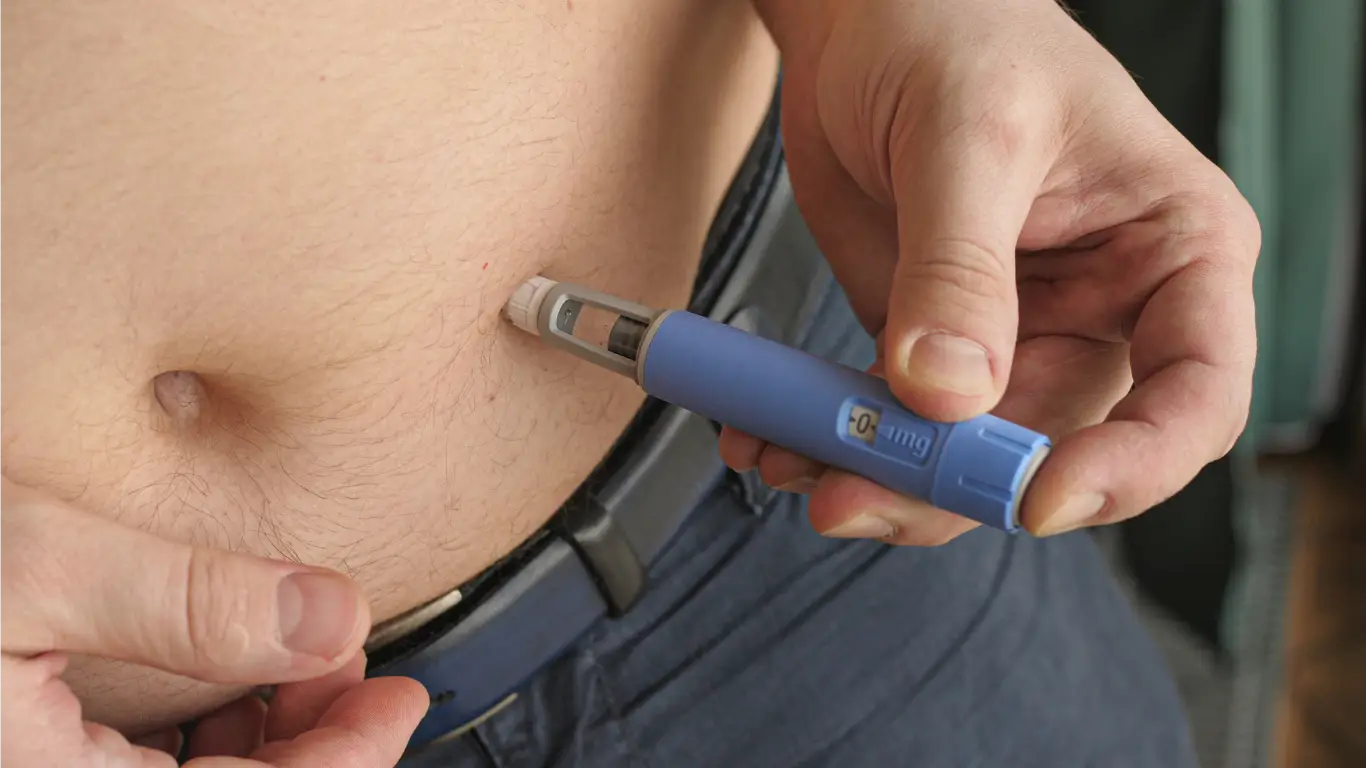
Insulin resistance and visceral adiposity drive far more age-related risk than any peptide can offset. This is why our medical weight-loss programmes frequently precede any longevity protocol.


Longevity peptides are one of the most over-promised categories in wellness medicine. At Prime Vitality Care we take the opposite approach: we tell you exactly what the published research supports, where it stops, and what United States regulators currently permit — then decide together whether a protocol is appropriate for you.
Please read first. None of the peptides discussed on this page are approved by the US Food and Drug Administration for anti-aging, longevity or lifespan extension. Any use is off-label or investigational, decided by a physician on a case-by-case basis after clinical evaluation, and undertaken only with your documented informed consent. Read the full disclaimer.
Longevity peptides are short chains of amino acids studied for their effects on cellular repair, gene expression, telomere biology and tissue regeneration. The evidence is highly uneven across the category. GHK-Cu (copper tripeptide-1) has the strongest foundation: more than four decades of research and gene-expression work showing it modulates the activity of thousands of human genes involved in skin remodelling, wound healing and antioxidant defence. Epithalon (also spelled Epitalon or AEDG) is far more preliminary — nearly all of its human data comes from a single Russian research group, and the first independent Western laboratory replication was only published in 2025.
Neither peptide is FDA-approved for anti-aging, and no peptide has been shown in a randomised controlled trial to extend human lifespan. Any responsible protocol is therefore an individualised, consented, off-label clinical decision made with a physician after baseline testing — not a retail purchase.
Every peptide below is available at Prime Vitality Care following physician evaluation. What we also publish — and most clinics do not — is how strong the evidence actually is and where each substance currently sits with the FDA, so your consent is genuinely informed.
| Peptide | Primary clinical interest | Human evidence | FDA / compounding status |
|---|---|---|---|
| GHK-CuCopper tripeptide-1 | Skin quality, collagen and elastin synthesis, wound healing, scar remodelling | Moderate Four decades of research, extensive gene-expression data and topical clinical studies. No longevity RCT. | 503A Category 1 — qualified as “except for injectable routes.” Injectable nomination withdrawn April 2026; non-injectable retained May 2026. FDA advisory committee consultation due before end of February 2027.1 |
| SermorelinGHRH 1-29 | Growth-hormone axis support, body composition, sleep quality, recovery | Moderate Well-characterised endocrine pharmacology from its period as an approved product. | Component of a previously FDA-approved drug, which is the basis on which compounders may prepare it.2 |
| CJC-1295 & Ipamorelin | Growth-hormone axis support, commonly used together | Mixed Clear mechanistic pharmacology; limited long-term outcome data. | Reviewed by FDA's advisory committee in December 2024; not FDA-approved.2 |
| BPC-157 | Soft-tissue and gastrointestinal repair, tendon and ligament recovery | Preliminary Large and consistent preclinical literature; controlled human data still limited. | Not FDA-approved. FDA has proposed it not be added to the 503A bulks list following its July 2026 advisory committee review.3 |
| TB-500Thymosin beta-4 fragment | Tissue repair, mobility, inflammation modulation | Preliminary Mostly preclinical; human data sparse. | Not FDA-approved. Under advisory committee review as of July 2026.3 |
| Thymosin alpha-1 | Immune modulation and resilience | Mixed Used clinically outside the US for specific indications; anti-aging use is off-label. | Not FDA-approved in the US. Considered by FDA's advisory committee in December 2024.2 |
| EpithalonEpitalon · AEDG tetrapeptide | Telomere biology, sleep and circadian rhythm, general vitality | Preliminary Human data concentrated in one research group; small, largely open-label. First independent Western in-vitro replication 2025. | Not FDA-approved and does not appear on the 503A bulks list or in FDA's interim-policy categories.1 Sourcing is therefore a specific point we discuss with you directly. |
| Semax & Selank | Cognitive performance, focus, anxiety and stress response | Preliminary Substantial Russian clinical use; little Western replication. | Not FDA-approved and not on the 503A bulks list.1 |
| PT-141Bremelanotide | Sexual desire and arousal | Strongest here Supported by randomised controlled trials in its approved indication. | FDA-approved as Vyleesi for hypoactive sexual desire disorder in premenopausal women; other uses are off-label.2 |
| NAD+ and glutathioneNot peptides, but often used alongside them | Cellular energy metabolism, antioxidant capacity | Mixed Strong mechanistic rationale; clinical outcome data thinner than marketing suggests. | Both appear in 503A Category 1.1 |
How to read the regulatory column. Category 1 means FDA is still evaluating a substance and has said it does not currently intend to act against compounders who meet its guidance conditions. Category 2 means FDA has identified significant safety risks.4 Absence from every list means the substance falls outside the section 503A framework entirely.1 None of these classifications is a verdict on whether a peptide can help you — that is a clinical judgement Dr Goel makes with you, from your history, your labs and your goals. They do tell you how much certainty exists, which is exactly what you need in order to consent properly.
GHK (glycyl-L-histidyl-L-lysine) was identified in 1973 in human plasma, where it was found to help older liver tissue behave more like younger tissue in culture. It binds copper with high affinity, and the resulting GHK-Cu complex is the form studied for tissue repair.5
Its most striking property is breadth rather than potency. Gene-expression work from Loren Pickart's laboratory reported that GHK altered the activity of a very large number of human genes — on the order of four thousand — shifting expression toward tissue remodelling, antioxidant defence and anti-inflammatory signalling, and away from fibrosis and tissue breakdown.5 That is a plausible mechanism for a peptide that appears to help several unrelated repair processes at once.
Plasma GHK levels are reported to decline substantially with age, from roughly 200 ng/mL in early adulthood to around 80 ng/mL by the sixth decade.5 This decline is the usual rationale for supplementation, though it is important to be clear that a falling biomarker is a hypothesis for benefit, not proof of it.
Epithalon is one of the most frequently asked-about peptides in longevity medicine. Here is what the research genuinely shows, what it does not, and how we handle it.
Epithalon is a synthetic tetrapeptide — alanine-glutamate-aspartate-glycine, or AEDG — developed from a pineal gland extract by Vladimir Khavinson's group at the St Petersburg Institute of Bioregulation and Gerontology. The original 2003 report described induction of telomerase activity and telomere elongation in human somatic cell culture.6 That finding is real and worth taking seriously.
The problem is what came after it, which is very little. A 2025 review of the peptide's bioactivity notes that the body of human work remains small, largely open-label, and concentrated in one research programme.7 The first independent replication from a Western laboratory — a group at Brunel University London — was published in Biogerontology only in 2025, and it is an in-vitro study, not a clinical trial. Notably, that work also raised a caveat about alternative lengthening of telomeres in cancer cell lines, which is exactly the kind of signal that needs resolving before enthusiasm is warranted.8
On the melatonin figure. The frequently repeated claim that Epithalon raises melatonin by roughly 160 percent traces to a small study in older women using approximately 0.5 mg per day sublingually for about twenty days, measured by urinary 6-sulfatoxymelatonin. It was conducted by the same group, and the reporting does not meet modern blinding and control standards. Other investigators have failed to reproduce an effect on melatonin secretion.7 We therefore present it as a preliminary observation rather than an expected outcome.
The oncologic question, stated plainly. Telomerase reactivation is one of the recognised enabling characteristics of malignancy, so any agent that increases telomerase activity carries a theoretical cancer question that has not been resolved in humans over long exposure. You may see Epithalon marketed as having “demonstrated cancer risk reduction” — the literature does not support that. This is why active or prior malignancy, or significant risk factors for it, is an exclusion in our practice, and why this specific point is covered in the consent discussion rather than buried.
On dosing. Regimens circulated online — commonly several milligrams daily for ten to twenty days — derive from Russian clinical practice literature rather than Western dose-ranging studies, and they sit well above the dose used in the sublingual melatonin work cited above. Because no validated dosing standard exists, we do not publish a fixed protocol here. Your dosing is set in consultation, with your history and laboratory results in front of us, and adjusted at review.
Epithalon is available at Prime Vitality Care following consultation, and the decision is made case by case. In that consultation you will hear all of the above directly: what the Khavinson work found, why single-group evidence is a genuine limitation, what the 2025 Brunel replication does and does not establish, the unresolved oncologic question, and its US regulatory position. If Dr Goel concludes a trial is clinically reasonable for you, it proceeds under documented informed consent that states plainly that this is an unapproved substance supported by preliminary evidence. If he concludes it is not appropriate for you, he will say so and explain why. Patients with active or prior malignancy, or significant risk factors for it, are not candidates.
Peptides are a refinement, not a foundation. Patients who get durable results almost always fixed something structural first.
Insulin resistance and visceral adiposity drive far more age-related risk than any peptide can offset. This is why our medical weight-loss programmes frequently precede any longevity protocol.
Thyroid, adrenal and sex-hormone dysfunction produce many of the symptoms people attribute to aging. These are testable and treatable with approved therapies — see hormone replacement therapy.
Inflammatory markers, nutrient status, and metabolic panels tell us whether a peptide is addressing a real deficit. Our root-cause assessment establishes that baseline.
Sleep architecture, resistance training, protein adequacy and alcohol reduction have better evidence for healthspan than every peptide on this page combined. We say so at every consultation.
A structured history covering goals, symptoms, medications, supplements, family history and prior therapies. We also establish what you have already tried and what it cost you.
Metabolic, inflammatory, hormonal and nutrient markers appropriate to your presentation. Without a baseline there is no way to judge whether anything worked.
For any agent under consideration you receive its evidence grade, its regulatory status, the realistic magnitude of expected effect, and the known unknowns.
Off-label and unapproved use is stated explicitly, in writing, before anything begins. You keep a copy. If we cannot justify a therapy to you on paper, we do not prescribe it.
Individualised dosing with a defined review point, typically eight to twelve weeks, and repeat markers. Protocols that are not producing measurable benefit are stopped rather than extended.
No. Epithalon is not FDA-approved for any indication, and it does not appear on FDA's 503A bulks list or in any of the three categories of substances nominated for that list.1 That is an important thing to understand before starting it, and it is why any use is an off-label, investigational decision made by a physician on a case-by-case basis with your documented informed consent. If you are considering Epithalon, sourcing is a specific topic we will cover with you directly in the consultation.
GHK-Cu appears in FDA's 503A Category 1 — substances still under evaluation, for which the agency has said it does not currently intend to take action against compounders meeting its guidance conditions. The listing is qualified as “except for injectable routes of administration”: the injectable nomination was withdrawn in April 2026 and only the non-injectable nomination was retained in May 2026, with an FDA advisory committee consultation due before the end of February 2027.1 It is not FDA-approved for anti-aging in any route. Route selection is part of the clinical discussion, and this distinction is one we make explicit during consent.
No peptide has been shown to extend human lifespan in a randomised controlled trial, and any clinic telling you otherwise is ahead of the evidence. Human lifespan trials are extraordinarily difficult to run, so the question is unresolved rather than settled in either direction. What several peptides do have is evidence for narrower, measurable effects — tissue repair, skin remodelling, growth-hormone axis support, sleep quality — and those are the outcomes we actually set targets against and measure.
Telomeres are protective sequences at chromosome ends that shorten as cells divide. Telomerase is the enzyme that can lengthen them. Lengthening telomeres sounds unambiguously good, but telomerase reactivation is also one of the recognised enabling characteristics of cancer, which is why the long-term oncologic safety of pharmacologically activating it in humans remains an open question. This is the central reason we treat telomerase-directed agents cautiously rather than promotionally.
The decision starts from your goal, not from a menu. A patient focused on skin quality and healing is a different conversation from one focused on recovery, sleep, cognition or libido. From there we weigh your history and contraindications, your baseline laboratory results, the strength of the evidence for each candidate agent, its current regulatory status, and how it interacts with anything else you are taking. Some patients leave the consultation with a peptide protocol. Others leave with a thyroid workup, a hormone panel or a metabolic plan instead, because that is what was actually driving their symptoms.
It depends on the goal. Recovery and sleep changes are often noticed within weeks. Skin quality with GHK-Cu is typically assessed at eight to twelve weeks against baseline photographs rather than a promised percentage. Longevity endpoints are not something you feel on a timeline at all, which is why we anchor those decisions to repeat laboratory markers instead of subjective impression. Every protocol has a defined review point, and one that is not producing measurable benefit is stopped rather than extended.
Research-grade peptides sold online are not manufactured to pharmaceutical standards, are frequently mislabelled for identity and purity, and carry real contamination and immunogenicity risks. Independent testing across this market has repeatedly found products that do not match their labels. Beyond product quality, self-administering without baseline testing means you cannot distinguish benefit from harm, and nobody is monitoring you. If you are already self-sourcing, bring what you are using to a consultation — we would rather supervise it properly than have you continue unmonitored.
Prime Vitality Care offers most of the peptides in clinical use for longevity, recovery, metabolic, cognitive and sexual-health goals — including GHK-Cu, sermorelin, CJC-1295 and ipamorelin, BPC-157, TB-500, thymosin alpha-1, Epithalon, Semax, Selank and PT-141. Availability is not the same as recommendation: every peptide is prescribed case by case, only after Dr Goel has evaluated you, reviewed your history and laboratory results, discussed the evidence and regulatory status candidly, and documented your informed consent. See the full peptide therapy programme for the complete list.
Bring any laboratory results from the past twelve months, a complete list of medications and supplements including doses, and a clear statement of what you are actually trying to change. If you have used peptides previously, bring the product details. The more accurate the baseline, the less we have to guess.
We are based in San Antonio, Texas, on Huebner Road, and we see patients across the greater San Antonio area including Stone Oak, Alamo Heights and Boerne. You can book a discovery call to discuss whether an evaluation makes sense before committing to anything.
Every substantive claim on this page maps to one of the following. Regulatory sources were verified against FDA's own published lists rather than secondary summaries.
Medically reviewed by Shiv Kumar Goel, MD — last reviewed August 2026. Regulatory status is re-verified quarterly.
This page is educational and does not constitute medical advice, diagnosis or treatment, and it does not create a physician-patient relationship. Nothing here should be used to self-treat or to obtain peptides outside a supervised clinical setting.
The peptides discussed are not approved by the US Food and Drug Administration for anti-aging, longevity or lifespan extension. Where Prime Vitality Care considers any such agent, it is an off-label or unapproved use undertaken at the physician's clinical discretion, only after evaluation and laboratory assessment, and only with the patient's documented written informed consent describing the unapproved status, the limitations of the supporting evidence, the known and unknown risks, and the available alternatives.
Individual responses vary. No specific result is promised or implied. Statements of evidence strength on this page reflect the published literature as of August 2026 and may change as new studies appear. Regulatory classifications reflect FDA publications current at the date of last review and are subject to change. Do not begin, stop or alter any therapy without consulting a qualified physician.
Book a discovery call with Dr Shiv Goel. You will get an evidence-graded assessment of which peptides fit your goals, how strong the evidence is for each, what the realistic expectations are, and what it will cost — before you commit to a protocol.
 Peptide Therapy OverviewAll protocols and how we evaluate them
 Hormone OptimizationApproved therapies for measurable deficiency
 Root-Cause AssessmentThe baseline testing behind every protocol
 Medical Weight LossThe metabolic foundation of healthspan
 Publications & WritingDr Goel's peer-reviewed and editorial work
 About Dr Shiv Goel, MDCredentials, training and clinical philosophy